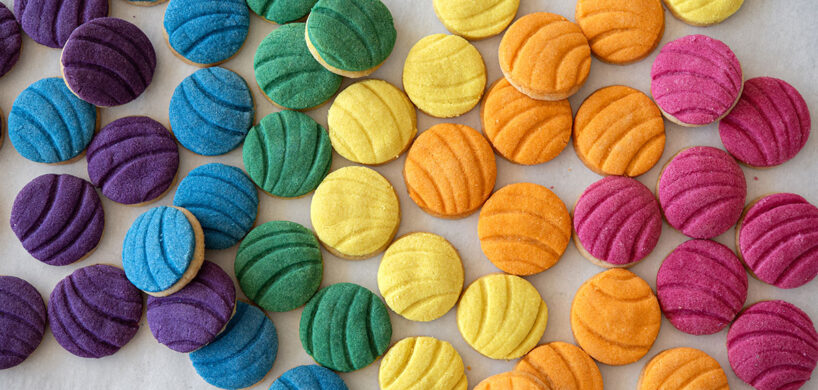

The bakery industry is a vibrant sector that thrives not only on the flavours and textures of its products but also on their visual appeal.
Colours made from fruits, vegetables, and plants are ideal because they can be used to deliver a complete spectrum of shades in baked goods while supporting natural ingredient declarations.
However, they are not a plug-and-play solution and careful formulation is required to achieve vibrant, stable shades.
At GNT, we create our entire EXBERRY® range from non-GMO fruit, vegetables and plants, and have nearly half a century of experience delivering plant-based colouring solutions.
Here we take a look at some of the key considerations for ensuring success with baked goods.


How baking affects natural colours
Baking is as much about chemistry as it is about ingredients. Each baked good relies on a careful balance of leavening, moisture and heat to achieve the right rise, texture and flavour.
That same chemistry can influence how bake-stable natural colours perform. Plant-based shades can respond to factors like pH, water and fat content, and bake profiles, so the colour dosage often needs adjustment for each recipe and process.
Chemically leavened batters, such as those using baking soda or baking powder, have a higher pH than yeast-leavened doughs, which can affect the vibrancy of certain reds and pinks.
Cake batters with higher water content are exposed to more extensive heat and chemical reactions than lower-moisture cookies or breads, which changes how colours perform.
Therefore, it’s not just about time and temperature – it’s understanding how the recipe and baking process interact with natural colours to achieve consistent, bake-stable results.

A rainbow of plant-based shades
EXBERRY® colours are available in a variety of formats and can be used to deliver a full spectrum of shades in baked goods. The colours are made from more than 30 different raw materials, which each have their own technical considerations.
- ORANGE: EXBERRY® can deliver orange shades using concentrates made from carrots, peppers and paprika. Occasionally, they can shift yellow in appearance in the presence of high fat, extended heat or shear. In such cases, alternative orange shades can be achieved by blending yellow and red concentrates. Oil-soluble annatto colours are available for use in fat-based applications.
- YELLOW: Yellow colours can be made from yellow carrot, pumpkin, safflower, turmeric and algal carotenes. Safflower offers good heat and light stability. Turmeric-based concentrates can be used to create vibrant shades but the choice of packaging is important due to light sensitivity. Yellow carrot, pumpkin and algal carotene colours contain carotenoid pigments and are pH-independent. They are prone to oxidation so can benefit from the use of ascorbic acid to maintain their appearance in products with a longer shelf life.
- RED: Our red concentrates are created from raw materials including radish, black carrot, red sweet potato and blackcurrant. These anthocyanin-containing reds are not heat-sensitive but can shift blue and become unstable at higher pH values.
- PINK: Anthocyanin-based concentrates made from sweet potato, carrot and radish can provide an excellent source of pink hues in low-pH applications and are fairly heat- and light stable. Beetroot concentrates, meanwhile, are not pH-sensitive but are sensitive to heat so often require higher dosages and the addition of ascorbic acid.
- BLUE: Spirulina concentrates can provide vibrant blues. They contain phycocyanin pigments, which are light-stable but sensitive to heat as well as acid. The baking process means higher dosages may be required to maintain the desired colour shade.
- GREEN: It is possible to achieve vibrant shades from turquoise to lime green in a wide range of applications by blending blue spirulina concentrates with yellow shades.
- PURPLE: Purple concentrates are made from raw materials including carrots and blueberries, which offer good heat and light stability but can be affected by pH levels. It is also possible to achieve purple and lavender hues by mixing spirulina concentrates with red and pink shades.
- BROWN: Apple concentrates are water-soluble, light stable, heat-stable and pH-independent, although they do not have high colour intensity. It is also possible to achieve a range of brown to black hues using blends, such as purple carrot, safflower and spirulina.
EXBERRY® makes it easy
Formulation success comes from considering both the recipe and the process, selecting the right plant-based shade, and tweaking the formula when needed to deliver reliable, vibrant colour.
Whatever your application, GNT’s expert technical team is on hand to offer tailored support at every step, from colour selection to stability testing to regulatory advice.
With decades of experience, we know how to accelerate your speed to market, help you scale up with confidence, and achieve the spectacular results you need with EXBERRY® plant-based colours.
For more information, visit www.exberry.com