The escalation of conflict in the Middle East is causing a systemic shock to the global food supply chain, with tangible implications for South Africa’s food and beverage sector.
At the heart of the disruption lies the Strait of Hormuz, a critical artery for both energy and agricultural inputs. The conflict has curtailed the flow of oil, gas and fertiliser feedstocks, driving sharp price increases across these commodities. Oil prices have surged by over 40%, while fertiliser costs, already accounting for up to 35% of grain production inputs, continue to climb.
This dual shock is particularly significant. Fertiliser production is highly energy-intensive, and reduced supply, combined with higher input costs, threatens global crop yields. Analysts warn that sustained disruption could lead to lower planting rates and declining output, amplifying food price inflation into 2027.
The impact is both direct and systemic. Rising diesel costs are inflating logistics expenses across the value chain, from farm to shelf. Given the country’s reliance on road freight, higher fuel prices quickly translate into elevated retail food prices. Additionally, a weaker rand, driven by global market volatility, further increases the cost of imported inputs such as fertilisers and certain food categories.
For South Africa’s food and beverage industry, the message is clear: resilience strategies, ranging from supplier diversification to energy efficiency, are no longer optional. As geopolitical risk reshapes global supply dynamics, agility will define competitiveness in an increasingly volatile market.
And South Africa is renowned for its agility and adaptability in times of crisis. Watch this space!
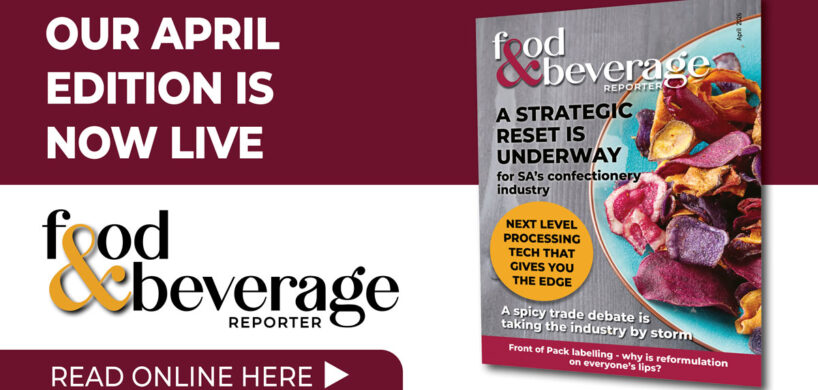
In this issue, we highlight Coca-Cola’s R17.6 billion investment in the country; we look into the implications of a packaging trade dispute between the manufacturers of Tabasco® and the Stoli Group; and we examine how Botselo Mills grew from delivering maize to farmers via a single bakkie to supplying the Shoprite Group.
Read how the country’s snacks and confectionery industry is entering a decisive reset, and how winning consumer loyalty requires more than a health halo; it also demands great taste, plus, how Symrise celebrates Vanilla Day.
Sial Paris 2026 is set to be the most ambitious in the show’s history, while Interpack showcases how food manufacturers can optimise every stage of production through smarter, more efficient processing and packaging solutions.
For the packaging sector, entries are now open for Gold Pack 2026. We look at how PulPac is extending its Dry Molded Fiber technology into caps and closures, how BMT is using its SMART prototyping approach in developing cost-effective bottle designs, and new analysis from NeilsenIQ in collaboration with Kearney indicates how AI technologies are enabling faster and more precise product development.
If you have any news, trends, tech improvements, or just celebrating that special company anniversary, talk to us.
If you haven’t already subscribed to our mailing list please click here.
For for any advertising or editorial queries or contributions or to request our media pack for 2025 contact us at wendy@fbreporter.co.za and editor@fbreporter.co.za
Browse the Flip Version Below, or Click the Green Download Icon to Download your April copy of the FBR Magazine in PDF format